

Over 16 years of street style, captured in various towns around the world.
Month
- November 2026 4
- October 2026 6
- September 2026 6
- August 2026 9
- July 2026 13
- June 2026 12
- May 2026 11
- April 2026 7
- March 2026 13
- February 2026 15
- January 2026 21
- December 2025 23
- November 2025 19
- October 2025 22
- September 2025 22
- August 2025 21
- July 2025 24
- June 2025 20
- May 2025 22
- April 2025 22
- March 2025 21
- February 2025 20
- January 2025 20
- December 2024 15
- November 2024 21
- October 2024 21
- September 2024 21
- August 2024 16
- July 2024 16
- June 2024 19
- May 2024 22
- April 2024 22
- March 2024 18
- February 2024 19
- January 2024 17
- December 2023 10
- November 2023 18
- October 2023 18
- September 2023 15
- August 2023 21
- July 2023 21
- June 2023 20
- May 2023 21
- April 2023 20
- March 2023 20
- February 2023 20
- January 2023 19
- December 2022 16
- November 2022 22
- October 2022 20
- September 2022 13
- August 2022 14
- July 2022 11
- June 2022 12
- May 2022 13
- April 2022 11
- March 2022 13
- February 2022 8
- January 2022 10
- December 2021 7
- November 2021 12
- October 2021 11
- September 2021 22
- August 2021 22
- July 2021 23
- June 2021 18
- May 2021 17
- April 2021 17
- March 2021 23
- February 2021 14
- January 2021 15
- December 2020 19
- November 2020 9
- October 2020 11
- September 2020 9
- August 2020 11
- July 2020 15
- June 2020 13
- May 2020 3
- April 2020 1
- March 2020 16
- February 2020 19
- January 2020 21
- December 2019 9
- November 2019 21
- October 2019 23
- September 2019 18
- August 2019 22
- July 2019 23
- June 2019 19
- May 2019 23
- April 2019 21
- March 2019 20
- February 2019 19
- January 2019 19
- December 2018 14
- November 2018 21
- October 2018 22
- September 2018 21
- August 2018 23
- July 2018 29
- June 2018 21
- May 2018 23
- April 2018 20
- March 2018 22
- February 2018 20
- January 2018 19
- December 2017 17
- November 2017 22
- October 2017 23
- September 2017 21
- August 2017 23
- July 2017 22
- June 2017 22
- May 2017 23
- April 2017 19
- March 2017 23
- February 2017 22
- January 2017 17
- December 2016 10
- November 2016 21
- October 2016 23
- September 2016 28
- August 2016 26
- July 2016 24
- June 2016 20
- May 2016 25
- April 2016 22
- March 2016 30
- February 2016 30
- January 2016 22
- December 2015 25
- November 2015 44
- October 2015 50
- September 2015 46
- August 2015 45
- July 2015 38
- June 2015 39
- May 2015 36
- April 2015 56
- March 2015 43
- February 2015 29
- January 2015 36
- December 2014 28
- November 2014 25
- October 2014 32
- September 2014 36
- August 2014 30
- July 2014 41
- June 2014 37
- May 2014 36
- April 2014 39
- March 2014 29
- February 2014 39
- January 2014 34
- December 2013 32
- November 2013 56
- October 2013 45
- September 2013 45
- August 2013 35
- July 2013 18
- June 2013 23
- May 2013 31
- April 2013 60
- March 2013 39
- February 2013 25
- January 2013 23
- December 2012 12
- November 2012 18
- October 2012 28
- September 2012 34
- August 2012 22
- July 2012 26
- June 2012 16
- May 2012 27
- April 2012 15
- March 2012 14
- February 2012 22
- January 2012 14
- December 2011 24
- November 2011 24
- October 2011 32
- September 2011 53
- August 2011 18
- July 2011 6
- June 2011 8
- May 2011 13
- April 2011 13
- March 2011 16
- February 2011 18
- January 2011 7
- December 2010 4
- November 2010 5
- October 2010 3
- September 2010 3
- August 2010 4
- July 2010 1
- April 2010 1

Sastrería 91 in Madrid
Sastrería 91 in Madrid
MITT MAGAZINE ISSUE Nº2

An excerpt from MITT magazine issue Nº2.
Intro by Natalie Shukur
Interview and Photography by Giuseppe Santamaria
In an unassuming neighbourhood in central Madrid, between hip Malasaña and affluent Salamanca, Paul García de Oteyza, 37, and Caterina Pañeda, 35, are making some of the most exciting men’s tailoring on the market at their shop, Sastrería 91. The couple, in life and in business, met through a friend and, on their first date, Paul took Caterina to Chicote—Madrid’s iconic cocktail bar on the Gran Vía, once frequented by the likes of Ernest Hemingway, Sophia Loren, Grace Kelly and Frank Sinatra. By coincidence, Cat’s grandfather used to own the tailor shop above the bar (her father was a tailor, too) and so, the pair’s course was set from the very beginning.
Seeing the duo in action is like watching a very well-dressed tennis match, with energy and ideas zinging past each other at high speed—they challenge each other often, even finishing each other’s sentences. With no formal fashion education bar a tailoring course, they relish the research process that brings a deep historical context to their work. Often dressed in full suiting (and always catching the eye of street-style photographers), the couple’s style is eclectic and elegant, embracing antiquity with a flourish of modernity. Indeed, even when clad in a full three-piece with a cravat, perhaps, or a striking hat, their tailoring retains a lightness and movement that stops it from ever being stuffy or restrictive.
Bespoke traditions are the crux of their business, and Oteyza and Pañeda have a uniquely creative side too, best demonstrated by their intricately made feather lapels, cuffs and bowties (available to purchase online), which won them a spot in the centre pavilion at the most recent Pitti Uomo tradeshow in Florence. And while an international audience is opening up to Sastrería 91, the new parents see themselves as underdogs, enjoying the busy pace of their small family business in pursuit of the perfect suit.
MITT met Oteyza and Pañeda at their studio on Calle de Rodriguez San Pedro, where we chatted about everything from the history of men’s dress, finding the perfect feathers, their take on tailoring and fashion’s unisex future.
MITT: Tailoring is in your blood, but you have only worked in it in the past few years. How did Sastrería 91 come to life?
Pañeda: Yes, we used to do other things … Paul was an economist and I used to be a translator. One day, he came home and said, “Why don’t we open a tailor shop?” And I said, “Are you crazy?! … Okay, let’s do it!” We didn’t get to know my grandfather’s tailor shop because it closed in the ’70s.
Oteyza: We have relationships with tailors and costumiers in our families—Caterina’s grandmother was a couturier. In my family, my father worked on a project exporting merino sheep to Australia to make wool, and now Australia is the biggest exporter of wool in the world. So he taught me a lot of things about wool. I would always go to the tailor shop with him and my grandfather. He was an agricultural engineer and I studied with him, so I was indirectly related to these things.
P: [When we opened the shop] my parents were like, “Are you crazy?!” [laughs]. They had good jobs—my father was a marketing director for a big pharmacy company.
O: It was impossible to start a business three years ago with the crisis in Spain; all the businesses closed.
P: We didn’t have a lot of money—we were having a baby and we had just bought a house. We did everything at the same time. Now we’re having our second baby!
What were some of your early experiences at the tailors, Paul?
O: My first baseball jacket, for example— I had it made at eighteen years old, when all the other guys would never think to do a baseball jacket. I always had this interest in … not fashion, but making clothes. I don’t follow fashion, really. If you see our shop, there are a lot of things that are not related to fashion.
So if not fashion, what influences your work?
O: We are always inspired by music: blues, jazz … We study in the museum of dress in Spain one or two days per week, looking at the evolution of the dress from the 16th century to now. We try to do our work in the sense of a laboratory of experiments. It’s not about production of garments—everything we do is one-off. We work with the imagination of the client and our experience and we try to create this kind of universe, you know?
It’s a lifestyle…
P: Yes, it’s a deep thing. What we want for our brand is to translate fashion to a lifestyle, and that’s why we research a lot. [We’re] not only looking at what others do. When we see some colleagues in tailor shops they say, “I look at what the Italians do, I look at what the English do, I look at what people are wearing …” And obviously we do, because we walk around the streets and we’re not blind! But we like gathering art, music, history, nature—our colours are very inspired by nature.
So you’re going a little bit deeper and you guys are actually teaching yourselves now…
P: Yes! That’s the point.
O: Our pillars are geometry, because it’s necessary to see the balance between everything; it’s like the architecture. Simplicity, always in life—simplify the lines, simplify the cuts. And movement. You can’t understand the dress without the movement of the person—how he expresses himself, how he walks … This is very important for us. With these three pillars we construct and then we add colours and textures…
Continued in MITT magazine issue Nº2.

Women's Wear
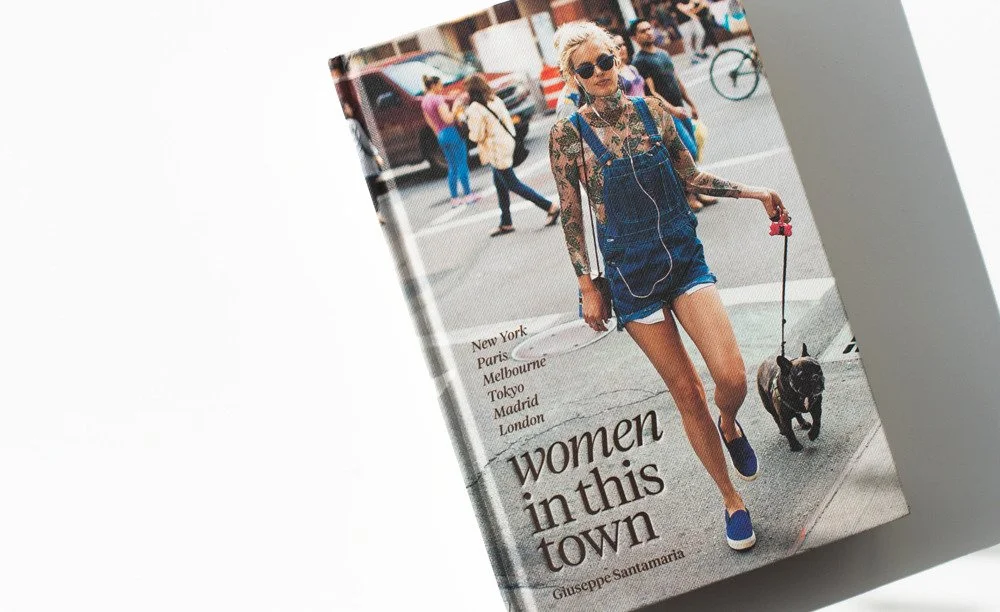
THE WOMEN IN THIS TOWN BOOK
It’s a humbling experience to be releasing my second book this week, especially amongst other photographers and bloggers I admire who are doing the same. The journey in creating this book has given me the opportunity to really find my point of view when it comes to photography and storytelling and I couldn’t be more excited to share it with you.
This book is dedicated to my mom, super woman. Her confidence, humour, unique style and strength are the same qualities I looked for in photographing the women in these towns. Individuals who are expressing themselves through fashion on their own terms, without a care in the world of what others might think.
I hope that at least one photo or story in this book will inspire you to do the same. Women In This Town: New York, Paris, Melbourne, Tokyo, Madrid and London is available to order online now and in all good bookstores worldwide.
Thank you to Hardie Grant Australia + UK and Rizzoli New York for believing in another book and to Olympus Australia for helping me capture these amazing women around the world.
Cheers,
Giuseppe
Women's Wear
Women In This Town
STREET STYLE GALLERY


THE WOMEN IN THIS TOWN BOOK
It’s a humbling experience to be releasing my second book this week, especially amongst other photographers and bloggers I admire who are doing the same. The journey in creating this book has given me the opportunity to really find my point of view when it comes to photography and storytelling and I couldn’t be more excited to share it with you.
This book is dedicated to my mom, super woman. Her confidence, humour, unique style and strength are the same qualities I looked for in photographing the women in these towns. Individuals who are expressing themselves through fashion on their own terms, without a care in the world of what others might think.
I hope that at least one photo or story in this book will inspire you to do the same. Women In This Town: New York, Paris, Melbourne, Tokyo, Madrid and London is available to order online now and in all good bookstores worldwide.

Thank you to Hardie Grant Australia + UK and Rizzoli New York for believing in another book and to Olympus Australia for helping me capture these amazing women around the world.


Style Matters
WITH ANDREW GEEVES
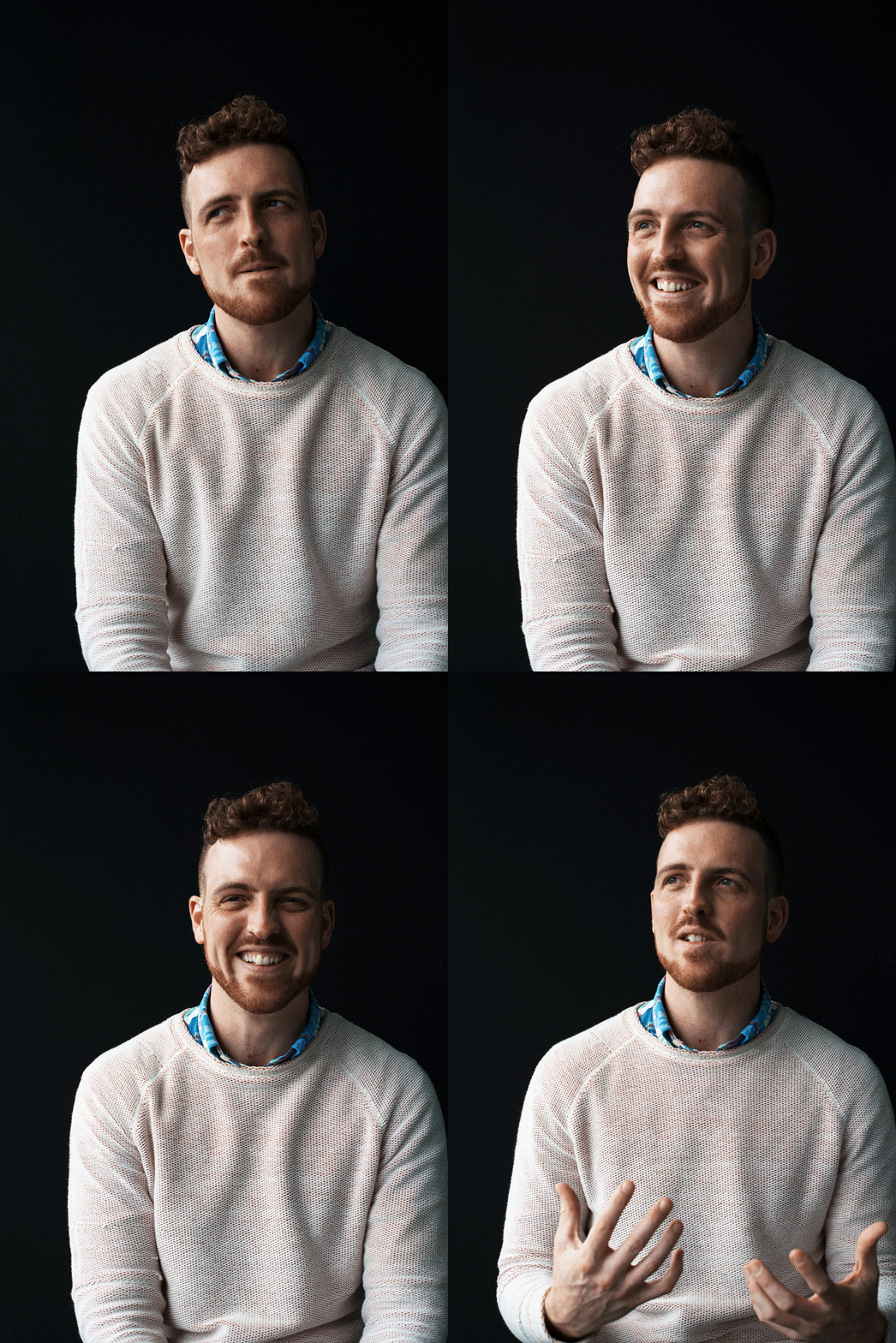
STYLE MATTERS WITH ANDREW GEEVES
Smells of patchouli oil, chai tea and sandalwood incense float through the air. I stand amongst gum trees, an aural healer to my left. For 50 dollars, he will let you sit in the middle of four glass cylinders that he then proceeds to beat the shit out of for about half an hour. They ring out with a noise that sits somewhere between the sounds of tortured wind chimes and taking advantage of human vulnerabilities. To my right is a self-proclaimed, rune-reading druid. Enough said.
I am in Victoria, visiting friends of mine, one of whom has a residency at Dunmoochin, an artists’ colony established by Clifton Pugh, an esteemed Australian portrait artist and winner of multiple Archibald Prizes. They have taken me to the St Andrews Community Market, a regular gathering of stallholders, visitors and those who live in and around St Andrews, a bush town nestled at the foot of the Yarra Ranges, an hour’s drive north-east of Melbourne.
The market has taken place here every Saturday morning for more than 40 years. Fresh fruit and vegetables, recycled clothing, natural remedies, second-hand goods and homemade products are some of the wares on display. All around me, people are bumping into each other and exchanging news, live music is being enjoyed and families are lolling in the sunshine. As I wander around, I eavesdrop on snippets of conversation. These make clear that the market plays an integral role in consolidating the bonds that underpin this area’s strong sense of community.
As my burger-and-beer-built body enters superfood-induced shock over the vegan, gluten-free, dairy-free, refined-sugar-free, tofu, kale and some-ancient-grain-that-sounds-very-different-to-how-it-is-spelled lunch to which I just subjected it, I step back and observe the crowd. Immediately, I am struck by how easy it is to identify the two main groups of people in attendance: the locals and the visiting inner-city dwellers. Clothing, accessories and hairstyles easily distinguish one group from the other. Locals are all about loose, flowing, colourful fabrics, tie-dye, dreadlocks, crystals hung on leather, dusty boots, East-Asian, African and South American prints, nose rings, colourful hats and tattoos of third-eyes and other mystic symbols. Visitors from the city favour black everything, slim-cut jeans, designer sunglasses, chunky jewellery of metal or resin, tailored leather jackets, sneakers, flats or loafers, asymmetry and impeccably maintained haircuts.
The local aesthetic is hippie, earthy and rough around the edges, while the urban Melbourne look is sharp, streamlined and polished; but members of both groups have put time, effort and thought into their styling. Everyone has curated their look to signal membership of a particular group by closely matching its visual aesthetic. What comes first, people who dress similarly forming a group or people who form a group dressing similarly, is a chicken-or-egg question for another time. However, if even the local St Andrews population—a community that prides itself on consciously living a lifestyle that does not mindlessly follow mainstream trends or culture—follows a strict, largely implicit dress code, the human urge to belong to a group of people and to outwardly exhibit this membership to others must be pretty strong.
Many of us wore uniforms at school and must obey dress codes at our places of employment. Yet, almost without realizing it, most of us continue wearing a “uniform” even when we don’t have to. In our downtime, we dress in ways that strongly identify us with groups that share elements of our lives—geography, income bracket, sexuality, education level, political preference and lifestyle practices. We feel this when we travel and find others labelling us based on what we wear. When I visit my suburban hometown, I’m a city slicker. When I visit Perth, I’m an Eastern stater. When I visit the inner-western suburbs of Sydney, I’m an inner-eastern suburb dweller.
We clad ourselves in items of clothing that signal our belonging, or our wish to belong, to particular groups and our distance from other groups from which we wish to remain separate. This behaviour makes sense given our evolutionary background—our chances of survival are increased if others are willing to offer you help, and looking alike increases this willingness. External appearance is a quick and effective way of signalling similarity. I would be more likely to rescue a Sydneysider from the jaws of a sabre-toothed tiger than a Melburnian because, based on their appearance, I would perceive the Sydneysider as more similar to me and, therefore, more worthy of receiving my help. (Also, Sydneysiders are better people and will always be more worth saving than Melburnians—just saying.)
“You’re all individuals,” Brian says to his crowd of followers in Monty Python’s Life of Brian. “Yes, we’re all individuals,” chants the crowd. “You’re all different,” declares Brian. “Yes, we’re all different,” replies the crowd. There is a truth to the humour in these lines. Perhaps more than we would like, we all comply with certain unspoken rules when it comes to style, in order to show our allegiance to a particular group. Anyone disheartened by this realization should remember that they wouldn’t be here if their ancestors hadn’t demonstrated exactly this behaviour.
Based in Sydney, with a background in psychology, Andrew has written and interviewed people about music, theatre, film, art and fashion for a variety of popular publications and academic journals.
